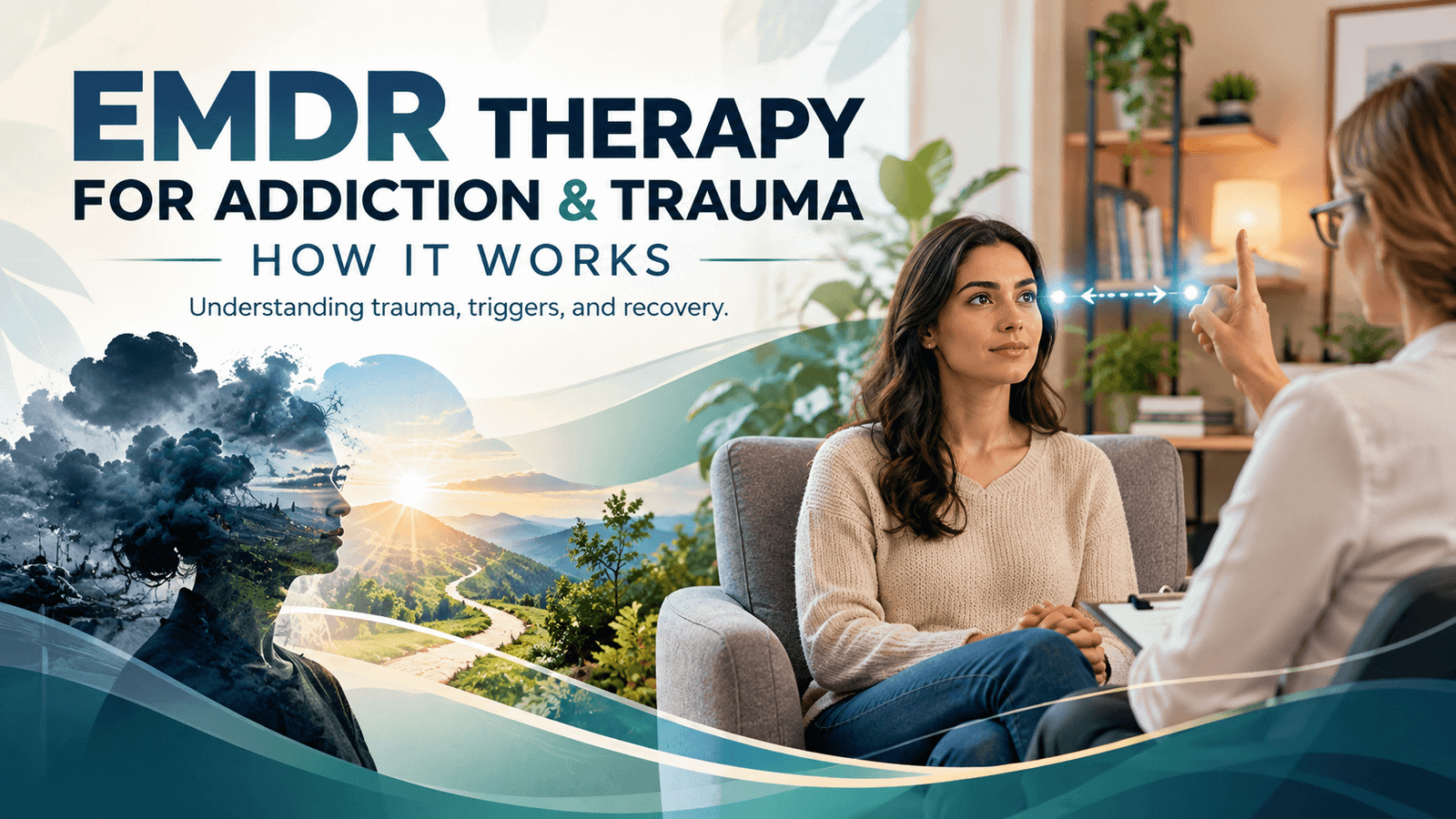
EMDR therapy for addiction is an evidence-informed approach that may help people address trauma, distressing memories, triggers, and cravings that can contribute to substance use. EMDR stands for Eye Movement Desensitization and Reprocessing, a structured psychotherapy originally developed to help people process traumatic experiences. Research has increasingly examined its potential role alongside substance use disorder treatment, particularly for people experiencing both trauma-related symptoms and addiction.
For someone struggling with addiction, understanding the connection between trauma and substance use can be an important part of recovery. Trauma does not automatically cause addiction, but unresolved traumatic experiences, PTSD symptoms, emotional distress, and difficulty regulating emotions can sometimes become part of a cycle of substance use and avoidance.
Recent research continues to investigate how EMDR may fit into treatment for people experiencing both substance use disorder and trauma. A 2025 meta-analysis of 14 studies reported significant effects for craving, PTSD, depression, and anxiety symptoms, while finding no significant effect on overall addiction severity. That distinction is important: EMDR may be useful as part of comprehensive care, but it should not be presented as a stand-alone cure for addiction.
What Is EMDR Therapy for Addiction?
EMDR therapy for addiction uses principles of Eye Movement Desensitization and Reprocessing to help a person process distressing experiences and reduce the emotional intensity associated with traumatic memories, triggers, or other experiences connected to substance use.
Traditional addiction treatment may focus on areas such as:
- Craving management
- Relapse prevention
- Behavioral change
- Healthy coping skills
- Recovery planning
- Counseling
- Peer support
- Medication when clinically appropriate
EMDR can potentially complement these approaches when trauma or distressing memories are relevant to a person’s substance use.
The goal is not to erase a person’s memories.
Instead, EMDR is designed to help the person process difficult memories in a way that may reduce their current emotional and physiological impact.
Research on EMDR and substance use disorders is still developing. A systematic review published in European Addiction Research identified early evidence for EMDR in substance use disorder treatment but also emphasized the limited size of the research base at that time.
More recent research has expanded that evidence base, including meta-analyses examining craving and trauma-related symptoms.
How Does EMDR Therapy for Addiction Work?
To understand how EMDR may support recovery, it helps to understand the basic concept behind the therapy.
People can experience memories as more than something they simply remember.
A traumatic experience may continue to trigger:
- Fear
- Shame
- Anger
- Anxiety
- Hypervigilance
- Physical tension
- Avoidance
- Intrusive memories
- Emotional distress
For some individuals, substances become a way of attempting to escape, numb, regulate, or avoid those feelings.
EMDR therapy works with a trained clinician to identify relevant experiences and process them using a structured therapeutic protocol that includes bilateral stimulation, commonly through guided eye movements, although other forms of bilateral stimulation may also be used.
The objective is to help the brain process the memory so that it becomes less emotionally overwhelming in the present.
This doesn’t mean the experience didn’t happen.
It means the memory may no longer control the person’s emotional response in the same way.
What Is the Connection Between Trauma and Addiction?
The relationship between trauma and addiction can be complicated.
Some people develop substance use problems after experiencing trauma. Others develop addiction for different reasons and later experience traumatic events or PTSD symptoms.
Research has found that PTSD and substance use disorder frequently co-occur and can create additional treatment challenges. A 2026 systematic review described PTSD-SUD as a combination associated with greater symptom severity and treatment challenges compared with either condition alone.
Another systematic review found that difficulties regulating emotions may be an important factor connecting PTSD and substance use.
This helps explain why simply telling someone to «stop using» may not address everything happening beneath the surface.
If substance use has become a way of coping with unresolved trauma, treatment may need to address both conditions.
Can EMDR Help With Addiction?
Research suggests that EMDR may have a role in addiction treatment, particularly when trauma, PTSD symptoms, or cravings are part of the clinical picture.
However, it is important to interpret the evidence accurately.
A 2025 meta-analysis of 14 studies found significant effects associated with EMDR for craving, PTSD, depression, and anxiety, but the effect on overall addiction severity was not statistically significant.
Another meta-analysis examining EMDR among people with substance use disorder reported positive effects across several outcomes and found an effect on SUD-related outcomes. However, the authors synthesized only 10 studies involving 561 participants, meaning the evidence base remains relatively small compared with some more established areas of psychotherapy research.
Therefore, EMDR should generally be viewed as a potential component of a broader treatment plan rather than a replacement for comprehensive addiction care.
How Does EMDR for PTSD and Substance Abuse Fit Into Treatment?
When someone has both PTSD and a substance use disorder, clinicians may need to address both problems rather than treating them as completely separate issues.
EMDR for PTSD and substance abuse may be considered when trauma-related symptoms are contributing to distress, triggers, avoidance, or other difficulties during recovery.
Treatment may include:
- Assessment
A clinician evaluates substance use, trauma history, PTSD symptoms, mental health, physical health, safety concerns, and recovery needs. - Stabilization and preparation
Before processing difficult memories, the therapist may help the person develop coping and emotional-regulation skills. - Identifying treatment targets
Relevant traumatic memories, current triggers, negative beliefs, or other clinically appropriate targets may be identified. - EMDR processing
The therapist guides the person through the EMDR protocol, including bilateral stimulation. - Reprocessing and integration
The goal is to reduce the distress associated with targeted memories and develop healthier adaptive responses. - Recovery integration
EMDR may be combined with relapse-prevention strategies, counseling, behavioral interventions, peer support, or other appropriate services.
The exact sequence and pacing should be individualized by a qualified clinician.
What Happens During an EMDR Session?
An EMDR session does not simply involve sitting in front of a therapist and moving your eyes from side to side.
It is a structured therapeutic process.
A clinician may begin by discussing what the person is experiencing and determining whether EMDR is appropriate.
Depending on the treatment plan, the therapist may ask the person to identify:
- A distressing memory
- Emotions connected with that memory
- Physical sensations
- Negative beliefs about themselves
- A healthier or preferred belief
- Current situations that trigger distress
During the processing phase, the therapist guides the person through bilateral stimulation while they briefly focus on aspects of the targeted experience.
The therapist then periodically checks what the person notices and guides the process.
The goal is not to force someone to relive trauma.
A properly conducted session is structured around safety, preparation, pacing, and the individual’s ability to tolerate the work.
Can EMDR Reduce Addiction Cravings?
This is one of the areas receiving increasing research attention.
A meta-analysis specifically examining EMDR and craving in people with substance use disorder found a significant reduction in cravings among participants receiving EMDR.
Another 2025 meta-analysis reported a moderate effect for craving reduction.
Why might this matter?
Cravings can be triggered by more than simply seeing or thinking about a substance.
They may be connected with:
- Memories
- Emotions
- People
- Places
- Relationship conflicts
- Shame
- Anxiety
- Stress
- Trauma reminders
- Learned associations
When those triggers are connected to unresolved experiences, addressing the underlying emotional response may be one part of a comprehensive recovery strategy.
However, reducing cravings is not the same as eliminating addiction.
Long-term recovery typically involves multiple components.
EMDR Therapy for Trauma: Who May Benefit?
EMDR therapy for trauma may be considered for people experiencing trauma-related symptoms when a qualified clinician determines that it is appropriate.
It may be particularly relevant when someone is experiencing:
- PTSD symptoms
- Intrusive memories
- Trauma-related anxiety
- Avoidance
- Emotional distress
- Negative beliefs related to past experiences
- Trauma-associated triggers
For someone also experiencing addiction, the clinician can consider how trauma symptoms and substance use interact.
Importantly, not everyone with addiction has unresolved trauma, and not everyone with trauma develops addiction.
Treatment should therefore be based on an individual’s assessment rather than assuming that trauma is the cause of their substance use.
Is EMDR Effective for PTSD?
EMDR has been extensively studied for PTSD.
A systematic review and meta-analysis published in Cognitive Behaviour Therapy evaluated randomized trials of EMDR for PTSD and other mental health conditions.
Research specifically involving people with co-occurring PTSD and substance use disorder has also produced encouraging findings.
A randomized controlled trial comparing PTSD treatment approaches among people with SUD and PTSD found that adding EMDR to SUD treatment reduced PTSD symptom severity compared with SUD treatment alone, although the study did not find between-group differences in substance-use outcomes.
That distinction is critical.
Treating trauma symptoms and treating addiction are related but not identical goals.
A person may experience improvement in PTSD symptoms while still needing dedicated support for substance use.
Is EMDR a Replacement for Addiction Treatment?
No.
EMDR should not automatically replace comprehensive addiction treatment.
Addiction can involve biological, psychological, social, environmental, and behavioral factors. Effective treatment should be individualized around the person’s needs.
Depending on the situation, treatment may involve:
- Individual therapy
- Group therapy
- Trauma therapy
- Relapse-prevention planning
- Medication-assisted treatment when appropriate
- Medical monitoring
- Family therapy
- Peer recovery support
- Intensive outpatient treatment
- Continuing care
For someone with both trauma and addiction, an integrated approach can help ensure that both concerns are addressed.
Research into integrated treatment for PTSD and substance use disorder supports the value of addressing both conditions rather than automatically requiring people to complete substance-use treatment before receiving trauma-focused care.
When Might EMDR Not Be the Right Choice?
EMDR is not automatically appropriate for everyone.
A qualified clinician should evaluate whether someone is ready for trauma-focused work and whether other needs should be addressed first.
Factors that may affect treatment planning can include:
- Current safety concerns
- Severe instability
- Acute intoxication
- Withdrawal
- Significant psychiatric symptoms
- Medical concerns
- Difficulty maintaining basic stabilization
- Lack of appropriate support
This doesn’t mean that someone with severe addiction cannot eventually participate in trauma therapy.
It means the timing, setting, and treatment approach should be individualized.
A professional assessment is the appropriate way to determine whether EMDR belongs in someone’s recovery plan.
What Are the Benefits of Combining Trauma and Addiction Treatment?
Treating trauma and addiction together can help clinicians understand the full picture.
For example, a person may say:
«I don’t understand why I keep going back to using.»
A deeper assessment may reveal that substance use frequently occurs after:
- Nightmares
- Flashbacks
- Family conflict
- Feelings of rejection
- Shame
- Panic
- Memories of abuse
- Relationship stress
If those patterns are identified, treatment can focus on healthier ways of responding to the underlying triggers.
This is one reason trauma and addiction treatment can be an important combination for people experiencing both conditions.
The objective isn’t to blame trauma for addiction.
It is to understand the individual well enough to build a treatment plan that addresses the factors maintaining the problem.
EMDR and Addiction: What Does the Research Say?
The research is promising but should be interpreted carefully.
Earlier systematic reviews identified only a small number of studies investigating EMDR in substance use disorders.
Since then, additional studies and meta-analyses have been published.
A 2025 meta-analysis found significant effects for craving, PTSD, depression, and anxiety, but not for overall addiction severity.
A separate meta-analysis focused specifically on craving also found significant reductions associated with EMDR.
At the same time, broader reviews of psychological treatment for co-occurring PTSD and SUD emphasize that treatment evidence varies by intervention and outcome, with study quality, dropout, and differences between treatment models affecting conclusions.
The takeaway is straightforward:
EMDR is a promising trauma-focused therapy that may support some people with addiction, especially when trauma or PTSD symptoms are part of the clinical picture, but it is not a universal or stand-alone treatment for addiction.
How Can Families Support Someone With Trauma and Addiction?
Families often want to help but don’t know what to say.
Start with compassion.
Instead of:
«Why can’t you just stop?»
Try:
«I’ve noticed that you’ve been struggling, and I’m concerned about you. I want to understand what you’re going through and help you find support.»
Families can also:
- Encourage professional assessment
- Avoid shaming or threatening
- Learn about trauma and substance use
- Support healthy routines
- Encourage treatment attendance
- Set appropriate boundaries
- Take emergencies seriously
- Participate in family counseling when recommended
Recovery is ultimately the individual’s journey, but supportive relationships can play an important role.
When Should Someone Seek Professional Help?
Consider reaching out to a qualified addiction or mental-health professional when substance use is:
- Becoming more frequent
- Affecting work or school
- Damaging relationships
- Creating financial problems
- Increasing despite negative consequences
- Being used to cope with trauma or emotional distress
- Associated with withdrawal
- Causing repeated attempts to stop without success
Someone does not need to wait for their addiction to become severe before seeking help.
Early assessment can help identify what is happening and what level of support may be appropriate.
Take the Next Step Toward Recovery
Trauma can leave a lasting impact.
Addiction can affect every part of a person’s life.
When the two occur together, recovery may require looking beyond the substance itself and understanding the experiences, emotions, memories, and patterns surrounding substance use.
EMDR therapy for addiction may be one component of that process for people who are appropriate candidates for trauma-focused treatment.
At Winds of Change Counseling & Recovery, compassionate, individualized care can help people explore the underlying challenges contributing to substance use while developing healthier tools for recovery.
If you or someone you love is struggling with addiction, trauma, PTSD, or co-occurring mental-health concerns, reaching out for professional support can be an important first step.
Recovery is possible—and asking for help is a sign that change has already begun.
Frequently Asked Questions About 7-OH
EMDR therapy for addiction is an approach that uses Eye Movement Desensitization and Reprocessing techniques as part of treatment for people whose substance use may be connected with trauma, distressing memories, triggers, or cravings. It is generally considered a component of comprehensive treatment rather than a stand-alone cure for addiction.
Research suggests EMDR may help with certain outcomes associated with addiction, particularly cravings and co-occurring PTSD symptoms. However, recent research has not established EMDR as a stand-alone treatment that eliminates addiction.
Yes. EMDR was developed as a trauma-focused therapy, and substantial research has examined its use for PTSD and trauma-related symptoms.
Trauma and substance use can interact in complex ways. Some individuals may use substances to cope with distressing emotions or trauma-related symptoms, while others develop substance use disorders for different reasons. PTSD and SUD can also occur together and may require integrated treatment.
Research has found significant reductions in cravings among people receiving EMDR in studies of substance use disorder, although more research is needed to determine how EMDR should best be incorporated into addiction treatment.
Usually, addiction treatment involves more than one intervention. EMDR may be useful when trauma-related symptoms are clinically relevant, but treatment should be individualized and may include counseling, behavioral interventions, medical care, medication when appropriate, and recovery support.
EMDR should be provided by an appropriately trained and qualified mental-health professional who can assess whether the therapy is appropriate for the individual’s circumstances.