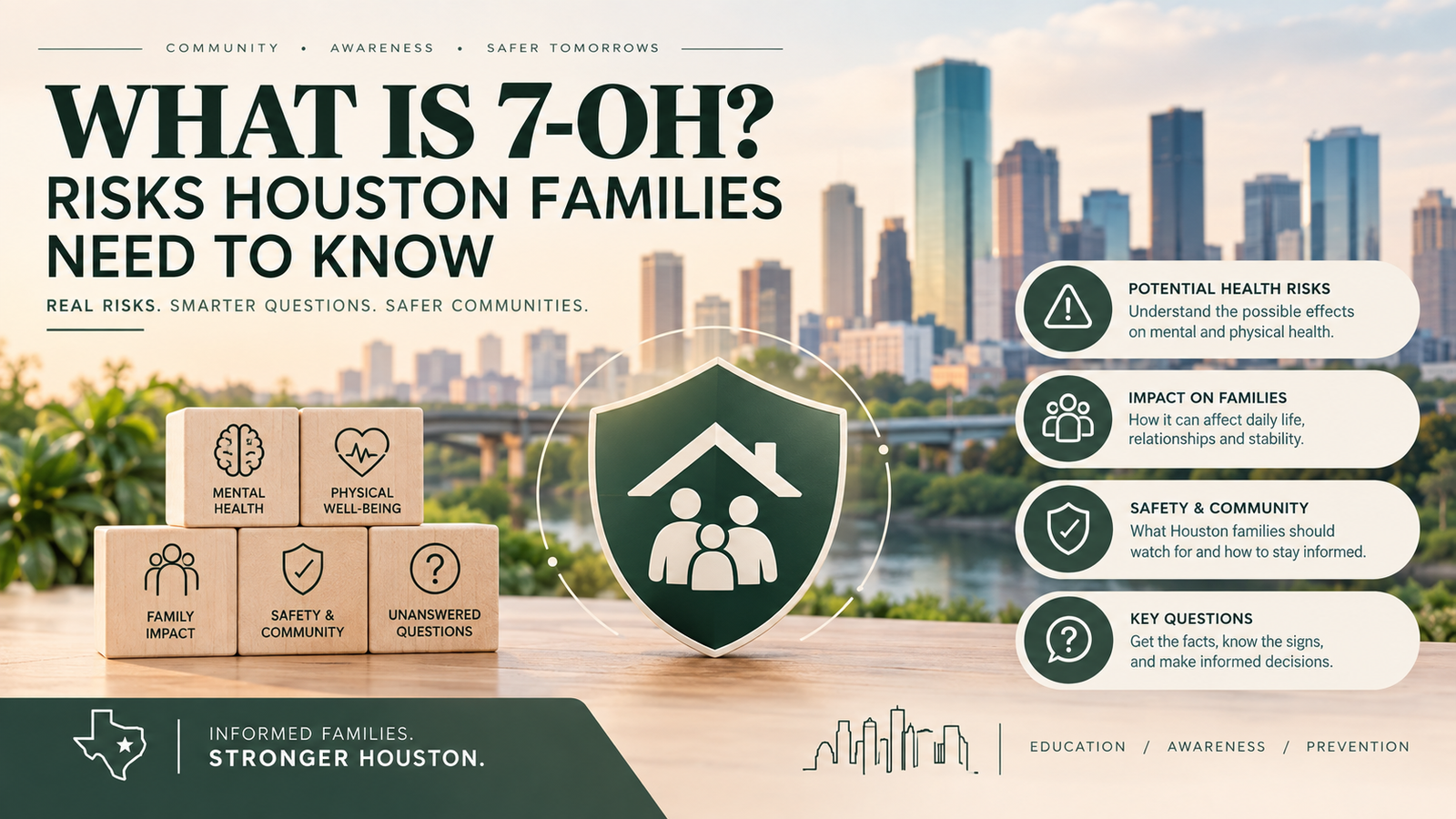
If you’ve recently heard the term 7-OH and wondered what it means, you’re not alone. 7-OH , short for 7-hydroxymitragynine , is a potent compound associated with the kratom plant that has drawn increasing attention from health officials because of its opioid-like effects and potential for dependence and abuse. For Houston families, understanding what 7-OH is, what products may contain it, and how to recognize potential problems can help you respond before occasional use develops into a more serious substance-use concern.
The US Food and Drug Administration (FDA) currently warns consumers to avoid products containing concentrated 7-OH, describing them as potent opioid products that have not been proven safe or effective for any medical use.
What Is 7-OH?
7-OH is short for 7-hydroxymitragynine , an alkaloid associated with Mitragyna speciosa , commonly known as kratom.
Small amounts of naturally occurring 7-OH can be found in kratom leaves. However, many commercially marketed 7-OH products contain concentrated or enhanced levels of the compound. These products may appear in forms such as tablets, gummies, drink mixes, liquid shots, powders, or other products.
The distinction is important.
The FDA’s concerns specifically focus on products containing added or concentrated 7-OH. According to the agency, these products can have potent opioid-like effects and have not been demonstrated to be safe or effective for treating pain, anxiety, opioid withdrawal, or other medical conditions.
In other words, a product being sold at a smoke shop, gas station, convenience store, or online does not mean that it has been evaluated and approved as a safe treatment.
Why Is 7-OH Getting So Much Attention?
The growing concern around 7-OH comes from its pharmacological effects and the increasing availability of concentrated products.
The FDA has described concentrated 7-OH products as novel potent opioid products and has reported adverse effects associated with their use, including addiction, anxiety, depression, gastrointestinal problems, insomnia, seizures, and withdrawal symptoms.
The FDA has also taken enforcement action against companies marketing products containing 7-OH. In December 2025, the agency announced the seizure of approximately 73,000 units of concentrated 7-OH products valued at about $1 million.
This matters for families because the products may not always look like traditional opioids.
Someone may think they’re purchasing a botanical supplement, gummy, shot, or wellness product without realizing that the product contains a concentrated substance with opioid-like activity.
7-OH vs. Kratom: What’s the Difference?
Kratom and 7-OH are related, but they aren’t exactly the same thing.
Kratom is a plant. Its leaves naturally contain numerous alkaloids, including mitragynine and smaller amounts of 7-OH.
7-OH refers specifically to 7-hydroxymitragynine. Naturally occurring 7-OH is present in kratom in relatively small quantities, while some commercial products are formulated with much higher concentrations.
This distinction is important because concentrated 7-OH products can expose a person to substantially more 7-OH than they would encounter in ordinary kratom leaf material.
The FDA’s scientific assessment notes that naturally occurring 7-OH generally represents only a small fraction of the dry weight of kratom, while concentrated products can contain substantially higher amounts.
What Are the Potential 7-OH Side Effects?
Potential 7-OH side effects can vary depending on the product, concentration, amount used, individual factors, and whether other substances are involved.
Reported symptoms associated with 7-OH exposure include:
- Nausea and vomiting
- Sweating
- Agitation
- Confusion
- Increased heart rate
- Increased blood pressure
- Excessive sleepiness
- Trouble breathing
- Loss of consciousness
- Seizures
- Respiratory depression
The Texas Department of State Health Services (DSHS) has specifically warned Texans about serious illnesses associated with 7-OH exposure.
Trouble breathing, loss of consciousness, or a seizure should be treated as a medical emergency.
Families should not assume that a product is harmless simply because it is labeled as herbal, natural, botanical, or dietary.
Can 7-OH Be Addictive?
Yes. 7-OH addiction and dependence are important concerns.
The FDA has reported addiction and withdrawal among adverse effects associated with 7-OH products.
Repeated exposure to opioid-like substances can lead to changes in how the brain and body respond to the substance. Over time, a person may begin using it more frequently, using larger amounts, or feeling unable to function normally without it.
Potential warning signs include:
- Using 7-OH more often than intended
- Increasing the amount used
- Strong cravings
- Spending significant time obtaining or using the product
- Continuing to use despite negative consequences
- Trying to stop but being unable to
- Experiencing withdrawal when use stops
- Prioritizing 7-OH over work, school, relationships, or responsibilities
These signs don’t mean that someone is weak or lacking willpower.
Addiction is a health condition that can require professional support.
What Does 7-OH Withdrawal Look Like?
7-OH withdrawal can occur when someone who has developed physical dependence reduces or stops their use.
The FDA has reported withdrawal symptoms associated with 7-OH products, including:
- Restlessness
- Body aches
- Fatigue
- Irritability
- Cold sweats
- Sleep difficulties
- Anxiety or emotional distress
The exact experience can vary from person to person.
If someone has been using 7-OH regularly and is experiencing significant withdrawal symptoms, speaking with a qualified healthcare or addiction professional can help determine an appropriate and safe next step.
Trying to hide the problem or abruptly managing severe symptoms alone may not be the best approach.
Why Houston Families Should Pay Attention
This isn’t only a national issue. Houston families should be aware of 7-OH because Texas health officials have already documented serious exposures.
In September 2025, the Texas Department of State Health Services reported 192 kratom or 7-OH exposure reports to the Texas Poison Center Network through August 27, compared with 107 reports during all of 2024. Nineteen of the 2025 reports involved concentrated 7-OH products, and 11 of those patients required treatment at a healthcare facility.
That doesn’t mean every person who encounters 7-OH will develop an addiction.
It does mean families should take unexplained 7-OH use seriously—particularly when use becomes frequent, secretive, escalating, or associated with changes in behavior, relationships, finances, sleep, or responsibilities.
What Do 7-OH Products Look Like?
One challenge is that 7-OH products may not resemble traditional drugs.
According to the FDA, concentrated products have been marketed in forms including:
- Tablets
- Gummies
- Drink mixes
- Liquid shots
- Other products marketed through online retailers and convenience-oriented businesses
Some products may use branding that emphasizes energy, relaxation, wellness, pain relief, or other lifestyle benefits.
Families should pay attention to product labels and ingredients rather than relying solely on packaging or marketing claims.
If a product contains 7-hydroxymitragynine, 7-OH, or concentrated kratom-derived ingredients, it deserves careful consideration.
Is 7-OH FDA Approved?
No.
There are currently no FDA-approved drugs containing 7-OH for medical treatment. The FDA has also stated that concentrated 7-OH products are not lawfully marketed as dietary supplements or conventional foods.
This is an important distinction when someone says they are taking 7-OH for pain, anxiety, opioid withdrawal, mood, or another medical condition.
A product being commercially available does not mean the FDA has established that it is safe and effective.
What About 7-OH and Texas?
Texas families should also understand that the legal and regulatory environment around kratom and 7-OH is evolving.
Texas lawmakers have considered legislation addressing kratom products, including provisions concerning certain concentrated, synthetic, pill, tablet, and other forms of kratom products.
At the federal level, the DEA announced in July 2026 that it had begun a temporary scheduling process concerning 7-OH above a proposed threshold, along with certain synthetic 7-OH derivatives. The federal process includes regulatory and public-comment steps, so families should rely on current official government guidance rather than assuming that a product’s availability means it is legal or medically safe.
Because regulations can change, this article should not be treated as legal advice.
How Can Parents Recognize a Potential 7-OH Problem?
A single observation doesn’t necessarily mean someone has an addiction.
However, several changes occurring together may deserve attention.
Look for:
Behavioral changes:
Secretive behavior, unexplained mood changes, isolation, declining responsibilities, or changes in social circles.
Physical changes:
Unusual sleepiness, sweating, nausea, changes in appetite, agitation, or unexplained physical discomfort.
Pattern changes:
Using 7-OH repeatedly throughout the day, carrying products everywhere, increasing the amount used, or becoming distressed when the product isn’t available.
Withdrawal-related behavior:
Becoming restless, irritable, physically uncomfortable, or anxious when they cannot use the substance.
The goal shouldn’t be to immediately label or shame the person.
The goal is to understand what is happening and connect them with appropriate help.
What Should a Houston Family Do If Someone Is Using 7-OH?
Start with a conversation—not an accusation.
Choose a calm moment and communicate concern without judgment.
Instead of:
«You have an addiction and need to stop.»
Try:
«I’ve noticed you’ve been using this more often, and I’m worried about how it’s affecting you. I want to understand what’s going on and help you get support.»
Listen before lecturing.
Ask open-ended questions:
- What are you using the product for?
- How often are you using it?
- How much are you taking?
- What happens when you don’t use it?
- Have you tried to stop?
- Are you experiencing cravings or withdrawal?
- Has it affected work, school, relationships, finances, or daily responsibilities?
If the person wants help, the next step can be an evaluation by a qualified healthcare or addiction professional.
When Is 7-OH Use an Emergency?
Some symptoms require immediate medical attention.
Seek emergency medical help if someone who has used a 7-OH product experiences:
- Difficulty breathing
- Severe respiratory depression
- Loss of consciousness
- Seizures
- Severe confusion
- Other signs of a life-threatening reaction
Texas DSHS advises contacting the Texas Poison Center Network for health concerns related to 7-OH exposure. The Poison Center Network can be reached at 1-800-222-1222.
If someone is unconscious, having a seizure, or experiencing severe breathing problems, call 911.
Where Can Someone Get Help for 7-OH Addiction?
If 7-OH use has become difficult to control, professional addiction treatment may provide a path forward.
Treatment can begin with an assessment to understand the person’s substance use, physical health, mental health, withdrawal risks, and recovery goals.
Depending on individual needs, care may include:
- Clinical assessment
- Withdrawal management or medical evaluation
- Individual counseling
- Group therapy
- Intensive outpatient support
- Relapse-prevention planning
- Family support
- Recovery education
- Continuing care
At Winds of Change Counseling & Recovery , our approach is centered on treating people with compassion, dignity, and respect while helping individuals and families move toward lasting recovery.
If you’re in Houston or the surrounding area and you’re concerned about 7-OH, kratom, opioids, or another substance, you don’t have to wait until the situation becomes a crisis before asking for help.
Frequently Asked Questions About 7-OH
7-OH is the common abbreviation for 7-hydroxymitragynine, an alkaloid associated with kratom. Concentrated 7-OH products have opioid-like effects and have raised significant safety concerns among federal and Texas health officials.
The FDA describes concentrated 7-OH products as potent opioid products because of their opioid activity.
Yes. The FDA has reported addiction and withdrawal among adverse effects associated with 7-OH products.
Reported effects include nausea, vomiting, sweating, agitation, confusion, rapid heart rate, sleepiness, trouble breathing, seizures, and respiratory depression.
Yes. People who develop physical dependence may experience withdrawal symptoms after reducing or stopping use. Reported symptoms include restlessness, body aches, fatigue, irritability, and cold sweats.
No. There are currently no FDA-approved drugs containing 7-OH for medical treatment.
No. 7-OH is a specific alkaloid associated with the kratom plant. Kratom contains multiple alkaloids, including mitragynine and naturally occurring 7-OH.
Families concerned about substance use can begin by speaking with a qualified healthcare or addiction professional. If someone is experiencing a medical emergency after using 7-OH, call 911. For concerns about exposure, Texas residents can contact the Texas Poison Center Network at 1-800-222-1222.
The Bottom Line for Houston Families
7-OH isn’t simply another wellness supplement.
Concentrated 7-OH products have been associated with opioid-like effects, dependence, addiction, withdrawal, and potentially serious health consequences. Federal and Texas health authorities have issued warnings as concerns about these products continue to grow.
If someone you love is using 7-OH, the most helpful response isn’t shame.
It’s awareness.
It’s conversation.
And when necessary, it’s professional support.
Recovery doesn’t have to begin with having all the answers. Sometimes it begins with asking one question:
«How can I help?»
If you or someone you love is struggling with 7-OH, kratom, opioids, or another substance, Winds of Change Counseling & Recovery is here to help you take the next step toward recovery.